Home automation systems unify lighting, security, climate, and energy controls into one intelligent platform. They matter now because homes demand efficiency, reliability, and privacy. In 2026, the strongest systems combine local control, open standards like Matter, and AI-assisted routines that adapt to real daily behavior instead of fixed schedules.
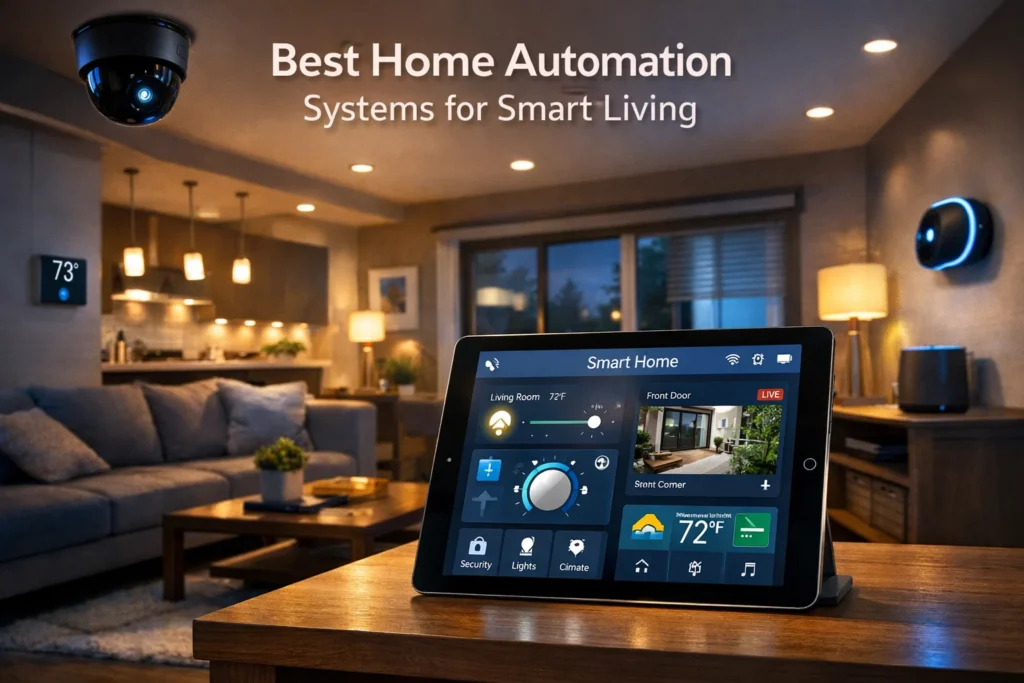
Home Automation Systems Explained
| Fact | Detail |
|---|---|
| What it does | Automates devices based on rules, sensors, and conditions |
| Core benefit | Comfort, security, and lower energy use |
| Top platforms | Google Home, Amazon Alexa, Apple HomeKit, Samsung SmartThings, Home Assistant |
| Best protocols | Matter, Zigbee, Wi-Fi |
| Cost range | From entry-level setups to luxury installations |
| Common issues | Compatibility gaps, cloud dependence, privacy risks |
| 2026 direction | Local processing, Matter adoption, AI-enhanced routines |
| Ideal users | Homes needing reliable, long-term automation |
Why Home Automation Matters More Than Ever
Homes are changing faster than most people realize. A few years ago, smart bulbs and voice assistants felt optional. Today, automation sits at the center of how modern homes manage energy, security, comfort, and time. According to industry reports from Gartner and IDC, global smart home adoption continues to grow each year as devices become cheaper, more reliable, and easier to integrate. But the real shift is not about adding more gadgets. It’s about systems that think, adapt, and work together.
Energy costs are rising worldwide. Security concerns are more complex than simple door locks. People work, study, and manage businesses from home. In response, homeowners want systems that do more than turn lights on and off. They want automation that reacts to routines, weather, occupancy, and even personal habits. That is why full home automation systems now matter more than individual smart devices.
Another reason this topic matters today is confusion. The market is crowded. Google Home, Alexa, Apple HomeKit, SmartThings, Home Assistant, Zigbee, Matter, Tuya the list keeps growing. Many buyers end up with devices that don’t talk to each other, apps that overlap, and systems that break when the internet drops. Choosing the right automation system upfront saves money, frustration, and future rewiring.
Here’s what matters most: the best home automation system is not the most expensive or the most popular. It’s the one that fits your home, your technical comfort level, and your long-term plans. Let’s break it down clearly.
What Is a Home Automation System?
A home automation system is the brain of a smart home. It connects devices, sets rules, and allows everything to work together automatically. Smart devices on their own respond to commands. Automation systems respond to conditions.
For example, a smart bulb turns on when you tap an app. An automation system turns lights on when you enter a room, dims them at night, and turns them off when no one is home. That difference is critical.
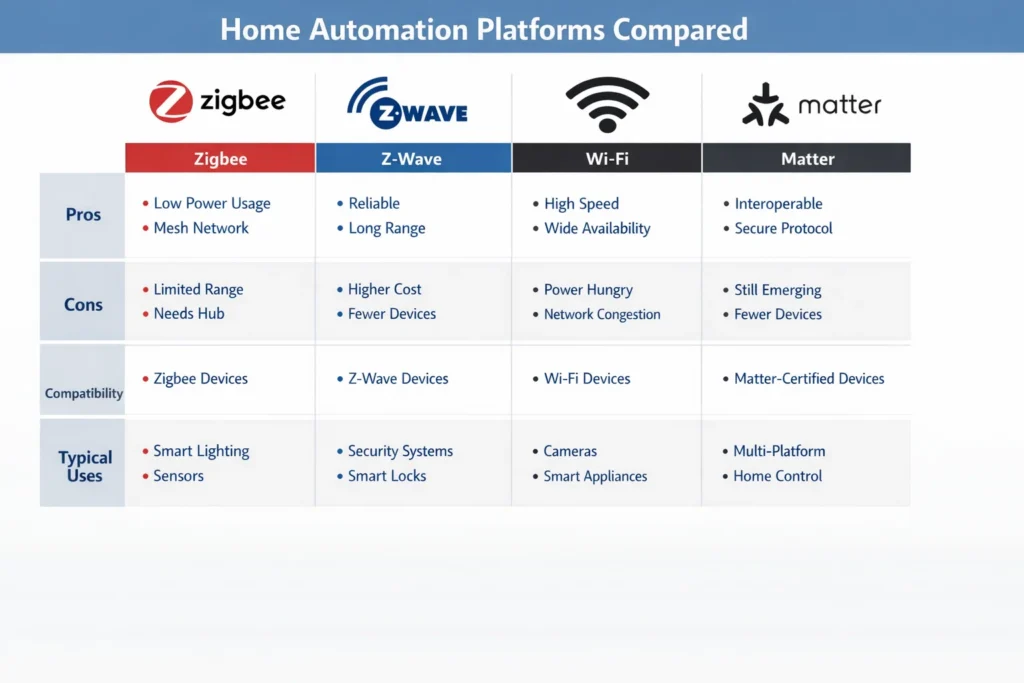
Most automation systems include four core components. First, the controller or hub. This can be a physical hub, a cloud platform, or a local server. Second, communication protocols like Zigbee, Z-Wave, Wi-Fi, or Matter. These allow devices to talk to each other. Third, automation rules. These define what happens and when. Fourth, user interfaces such as mobile apps, dashboards, or voice assistants.
The biggest misunderstanding is assuming all smart homes are automated. Many homes are not. They are collections of apps. True automation reduces manual control over time. The system learns patterns or follows logic so the home runs quietly in the background.
This distinction becomes even more important when looking toward 2026. Automation systems are increasingly blending with AI. They don’t just follow rules. They suggest better ones. That’s where today’s choices shape tomorrow’s experience.
Common Smart Home Problems and Their Causes
Before reviewing the top systems, it helps to understand what usually goes wrong. Most smart home complaints fall into predictable patterns.
| Problem | Cause | Impact |
|---|---|---|
| Devices disconnect often | Weak Wi-Fi or mixed protocols | Unreliable automation |
| Apps feel cluttered | No central hub | Poor user experience |
| Automations stop working | Cloud dependency | System failure during outages |
| Privacy concerns | Cloud data collection | Loss of trust |
| High setup cost | Overbuying devices | Wasted budget |
Connectivity issues usually come from relying on Wi-Fi for everything. Wi-Fi works well for phones and laptops, not always for dozens of small devices. Compatibility problems appear when brands lock users into closed ecosystems. Privacy concerns increase when all automation depends on remote servers.
Understanding these issues helps you evaluate systems more realistically. The best platforms solve most of these problems by design, not by adding more apps.
Top Home Automation Systems Reviewed
Google Home Ecosystem
Google Home is popular because it feels familiar. It integrates deeply with Android devices and Google Assistant. Setup is simple. Voice control works well. For beginners, it offers a smooth entry into automation.
Its strength lies in convenience. Many third-party devices support Google Home. The interface feels clean. Routines are easy to create. However, Google Home still relies heavily on cloud processing. Advanced automations are limited compared to open platforms. Offline control is minimal.
Google Home works best for apartments, small homes, and users who want simplicity over customization. It’s not ideal for complex automation logic or privacy-focused setups.
Amazon Alexa Smart Home
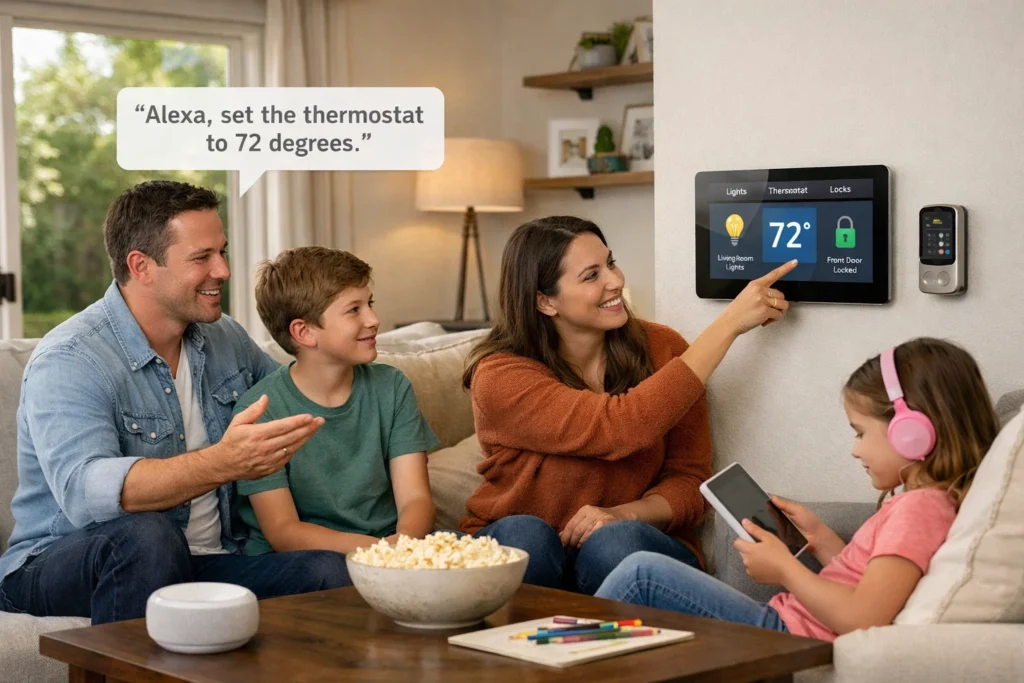
Amazon Alexa dominates voice control. The ecosystem supports thousands of devices. Alexa routines are flexible and powerful for voice-driven homes. For many users, Alexa feels like the center of the smart home experience.
The downside is fragmentation. With so many devices and skills, consistency can suffer. Privacy-conscious users may feel uneasy about constant cloud interaction. Like Google Home, Alexa depends heavily on internet connectivity.
Alexa suits users who value voice interaction, wide device choice, and fast setup. It works well for families and shared homes.
Apple HomeKit
Apple HomeKit takes a different approach. Privacy and security come first. Most processing happens locally. Encryption is strong. Device certification is strict, which reduces compatibility issues but limits options.
HomeKit works best within the Apple ecosystem. If you use iPhones, iPads, and Apple TVs, the experience feels polished. Automations are reliable. Offline control is better than most cloud-based platforms.
The main drawback is cost. HomeKit-compatible devices are often more expensive. Customization is more limited than open-source platforms. Still, for privacy-focused users, HomeKit remains one of the safest choices.
Samsung SmartThings
SmartThings sits in the middle ground. It supports Zigbee, Z-Wave, Wi-Fi, and now Matter. The platform balances ease of use with flexibility. It works with many brands and offers decent automation depth.
SmartThings is well suited for medium to large homes. It allows mixed-device environments without locking users into one brand. Cloud dependency still exists, but local control has improved.
For most users, SmartThings offers one of the best balances between power and simplicity.
Home Assistant
Home Assistant is the most powerful platform on this list. It is open-source, runs locally, and supports almost every protocol and device type. Automations can be extremely advanced. Privacy is fully under user control.
The trade-off is complexity. Setup requires technical comfort. Maintenance is ongoing. There is no single company providing full support.
Home Assistant suits enthusiasts, professionals, and users who want total control. It is also the most future-proof system for AI-driven automation, as it evolves rapidly with community development.
Which Home Automation Hub Is Best?
There is no universal answer, but patterns emerge. Cloud-only hubs are easy but fragile. Local hubs are resilient but complex. Hybrid systems offer balance.
If reliability matters, local processing wins. If convenience matters, cloud systems feel easier. For long-term use, hybrid platforms with local fallback are becoming the standard.
Matter is also changing the hub landscape. It reduces dependence on brand-specific hubs by improving interoperability. In 2026, hubs that fully support Matter will have a clear advantage.
Zigbee vs Tuya vs Wi-Fi vs Matter
Zigbee excels at low-power, stable communication. It is ideal for sensors and lighting. Wi-Fi offers speed but consumes more power. Tuya provides a low-cost ecosystem, popular with budget devices, but relies heavily on cloud services. Matter focuses on standardization, aiming to unify platforms.
The trend is clear. Matter combined with Zigbee-like efficiency is shaping the future. Systems that embrace this combination will age better.
How Much Does a Full Home Automation System Cost?
Costs vary widely. Entry-level setups can start under a few hundred dollars with basic lighting and voice control. Mid-range systems with sensors, hubs, and security often reach into the low thousands. Luxury home automation, involving professional installation, custom panels, and whole-home control, can cost significantly more.
The key is scaling gradually. Start with a strong platform. Add devices over time. Avoid buying devices that don’t fit your long-term system.
How to Choose a Home Automation System
Start with your goals. Do you want convenience, security, energy savings, or all three? Next, assess your technical comfort level. Then consider privacy expectations and budget.
A simple flow helps: needs first, platform second, devices third, automation rules last. Reverse that order and problems follow.
Automation vs AI: What’s the Real Difference?
Automation follows rules. AI learns patterns. In practice, modern systems blend both. AI suggests optimizations, predicts behavior, and improves efficiency. Automation executes reliably.
Neither replaces the other. The best systems combine rule-based control with AI-assisted refinement. That balance defines next-generation smart homes.
Who Leads Home Automation Globally?
The United States leads in platforms and software. China leads in manufacturing and scale. Europe leads in standards and privacy regulations. Each region influences the market differently.
The biggest companies dominate ecosystems, but open platforms are gaining influence through community-driven innovation.
What’s Trending in Home Automation for 2026
Matter adoption is accelerating. Energy-aware automation is becoming standard. AI-driven routines are improving. Local processing is gaining importance again. Simplicity is replacing novelty.
The direction is clear. Smart homes are becoming quieter, more reliable, and less dependent on constant user input.
Expert Insights and Industry Perspective
Gartner predicts that by the mid-2020s, most smart homes will rely on unified platforms rather than isolated devices. IEEE research highlights the importance of interoperability and security as adoption increases.
These insights align with real-world use. Homes that work best are those with fewer apps, stronger foundations, and clear automation logic.
Practical Home Automation Checklist
Before buying: define goals and platform.
During setup: prioritize local control and stable protocols.
After installation: refine automations gradually and monitor performance.
Resources for Further Learning
Industry reports from Gartner and IDC, open-source communities like Home Assistant forums, and standards organizations like the Connectivity Standards Alliance offer valuable guidance.
Final Thoughts Before You Build Your Smart Home
The best home automation system is not about chasing trends. It’s about choosing a platform that fits your life today and adapts tomorrow. Simplicity, reliability, and flexibility matter more than brand names. Build slowly, think long-term, and let automation serve you quietly in the background.
FAQs: Best Home Automation Systems
What are the top home automation companies today?
The most recognized names include Google, Amazon, Apple, Samsung, and the open-source Home Assistant community. Each focuses on a different strength, such as ease of use, privacy, flexibility, or deep customization.
Which brand is best for home automation?
There is no single best brand for everyone. Google and Amazon work well for beginners. Apple suits privacy-focused users. Samsung SmartThings fits mixed-device homes. Home Assistant is best for advanced users who want full control.
Which home automation hub is best?
The best hub depends on your needs. SmartThings offers balance and wide compatibility. Apple TV or HomePod works well for HomeKit users. Home Assistant is the most powerful local hub for advanced setups.
Who is the biggest automation company in the world?
By ecosystem size and consumer reach, Amazon and Google lead globally. However, no single company controls the entire automation market due to open standards and regional differences.
Which home automation is trending now?
Matter-based automation is the biggest trend. Systems that support Matter, local control, and AI-assisted routines are gaining rapid adoption going into 2026.
How much does a full home automation system cost?
Basic setups can start with a few hundred dollars. Mid-range systems often cost between one and three thousand dollars. Luxury home automation with professional installation can cost much more, depending on home size and customization.
How do I choose a home automation system?
Start by defining your goals: comfort, security, or energy savings. Then consider your budget, technical comfort level, privacy needs, and whether you prefer cloud or local control.
What are common problems with smart homes?
The most common issues include device disconnections, compatibility problems, cloud outages, privacy concerns, and overly complex app management caused by mixing platforms.
Which country is best for automation technology?
The United States leads in platforms and software, China leads in manufacturing and scale, and European countries lead in privacy standards and interoperability frameworks.
Which platform is best for automation?
For ease of use, Google Home and Alexa work well. For balance and flexibility, SmartThings is strong. For privacy and advanced control, Home Assistant and HomeKit stand out.
Which is better, automation or AI?
Automation and AI serve different roles. Automation executes rules reliably. AI improves systems by learning patterns and suggesting optimizations. The best systems combine both.
Which is better, Tuya or Zigbee?
Zigbee is more reliable for local, low-power devices. Tuya is cheaper and cloud-focused. Zigbee is better for long-term stability and advanced automation.
What is luxury home automation?
Luxury home automation involves whole-home control of lighting, climate, security, audio, and shading through custom panels and professionally designed systems.
What is the best home automation system in 2026?
In 2026, systems that support Matter, offer local control, and integrate AI features stand out. SmartThings, Home Assistant, and modern HomeKit setups are among the strongest options.

Digital innovation analyst with a focus on AI, IoT, and connectivity. Maria’s articles combine data-driven research, industry statistics, and tested solutions, helping global readers stay informed, confident, and future-ready in technology.