
Why Sustainable Technology Matters in 2025
Sustainability isn’t just a buzzword anymore it’s a business imperative. In 2025, technology and sustainability are finally walking hand in hand. The pressure on companies to adopt eco-friendly practices is greater than ever. According to the United Nations Environment Programme (UNEP), global e-waste hit a record 62 million tons in 2024, with less than a quarter being properly recycled. Meanwhile, Gartner predicts that by 2027, 75% of businesses will have sustainability goals directly tied to digital transformation.
That shift isn’t just about ethics it’s about economics. Sustainable technologies lower operational costs, attract eco-conscious customers, and improve brand reputation. From AI-driven energy optimization to IoT-powered waste management, the modern business landscape is built on efficiency and responsibility.
Whether you’re running a small café or a growing tech startup, sustainable technology can turn everyday operations into a smarter, greener system one that saves money while securing your company’s future.
Visual cue: An infographic showing global sustainability stats (energy savings, waste reduction, emission targets) would fit here.
Understanding Sustainable Technology
Before diving into implementation, let’s understand what sustainable technology really means. It’s not just solar panels and recycling bins it’s a strategic use of digital tools that minimize environmental impact while maximizing efficiency. Sustainable technology can include:
- AI-driven analytics that predict energy consumption patterns.
- IoT sensors that track water or energy usage in real time.
- Smart grids that automatically balance energy flow.
- Cloud systems that reduce physical server waste.
In essence, sustainable technology is about doing more with less less power, less waste, and fewer emissions while driving innovation and long-term profitability.
| Problem | Cause | Sustainable Tech Solution |
|---|---|---|
| High electricity bills | Inefficient equipment | IoT-enabled smart meters and AI monitoring |
| Supply chain waste | Poor forecasting | Predictive analytics for logistics |
| Carbon emissions | Outdated energy systems | Renewable energy integration |
| Water misuse | Manual oversight | Automated water sensors and controls |
These solutions aren’t limited to large corporations. Even small businesses can adopt simple, low-cost options like smart thermostats or digital invoicing systems that reduce both expenses and waste.
The 5 C’s of Sustainability in Modern Business
To successfully integrate sustainable technology, every business should focus on the five C’s of sustainability the pillars that guide meaningful transformation.
1. Clear Goals
Start by defining what sustainability means for your business. Is it cutting energy costs by 20%? Reducing paper use? Achieving net-zero emissions? Setting measurable goals helps direct your technology investments.
2. Continuous Innovation
Sustainability is not a one-time project. It’s an evolving process. Constantly evaluate emerging technologies from AI-powered energy forecasting to blockchain-based supply chain transparency to stay efficient and competitive.
3. Collaboration
True sustainability comes from teamwork. Collaborate with employees, customers, and suppliers to create a shared vision. Encourage your team to suggest eco-friendly innovations, and involve partners who share your green mission.
4. Circular Economy
Shift from a linear “make, use, dispose” model to a circular one reuse, repair, and recycle. Businesses like Dell and Patagonia have mastered this approach, designing products with materials that can be reused or refurbished.
5. Carbon Accountability
Track and manage your carbon footprint with digital tools. Platforms like Microsoft Cloud for Sustainability and Salesforce Net Zero Cloud make it easier to visualize emissions and implement reduction strategies.
Together, these five principles create a roadmap toward technological sustainability that scales with your business’s growth.
How to Integrate Sustainable Technology in Business
Step 1: Assess Your Current Tech Footprint
Before integrating anything new, evaluate what’s already in place. Conduct an internal sustainability audit to measure:
- Power consumption per department
- Paper and plastic use
- Cloud data storage efficiency
- Hardware lifecycle and e-waste handling
Tools like Carbon Trust Footprint Calculator can help estimate your emissions baseline.
Step 2: Choose Renewable and Energy-Efficient Systems
Switch to green-certified devices, LED lighting, and energy-efficient equipment. For example, HP’s Planet Partners program recycles printer cartridges into new devices. Cloud solutions such as Google Cloud or Amazon Web Services (AWS) offer carbon-neutral data centers allowing small firms to cut emissions without huge infrastructure costs.
Step 3: Leverage Automation and AI
Artificial intelligence can drastically reduce waste. AI algorithms can:
- Adjust HVAC systems based on real-time occupancy
- Optimize delivery routes to cut fuel use
- Predict maintenance needs before breakdowns
A 2024 Accenture study found that AI-driven sustainability could help reduce global emissions by up to 4% annually equal to the yearly output of Japan.
Step 4: Train Teams for Adoption
Technology only works if people use it properly. Conduct workshops and micro-courses to teach employees about sustainable tech tools. Many small companies use gamified dashboards that reward energy-saving actions within teams.
Step 5: Measure and Improve
Use digital dashboards to track metrics like:
- CO₂ saved per month
- Energy efficiency rate
- Waste diverted from landfills
Dashboards like Power BI, Google Looker Studio, or SpheraCloud can visualize progress and guide continuous improvement.
Real-World Examples of Businesses Going Green
Tesla – Sustainable Manufacturing with Automation
Tesla uses AI-powered robotics and renewable-powered factories to reduce waste in electric vehicle production. Its Gigafactories are designed to operate on 100% renewable energy, showcasing how automation and sustainability can coexist.
Microsoft – AI for Carbon Tracking
Microsoft’s cloud-based sustainability suite helps enterprises map and manage emissions across global operations. By 2030, Microsoft aims to be carbon negative meaning it will remove more carbon than it emits.
Local Café – Smart Energy Dashboard
A local café in Toronto implemented IoT-enabled thermostats and solar energy monitoring tools. Within six months, the café cut electricity usage by 28%, saving nearly $1,200 annually while improving customer comfort.
Tools and Platforms for Sustainability Integration
Here are some of the most effective digital tools to help integrate sustainability seamlessly:
| Tool / Platform | Purpose | Key Benefit |
|---|---|---|
| Microsoft Cloud for Sustainability | Carbon tracking | Real-time emission monitoring |
| EcoVadis | Sustainability rating | Supplier transparency |
| EnergyCAP | Utility data management | Reduces waste in facilities |
| IBM Envizi ESG Suite | Data automation | Simplifies ESG reporting |
| Schneider Electric EcoStruxure | Energy efficiency | Smart control of building energy |
These tools use AI, IoT, and cloud integration to help companies manage and optimize sustainability performance with precision and scalability.
Challenges in Implementing Sustainable Tech
While the advantages are clear, challenges remain.
1. Cost and ROI Balancing
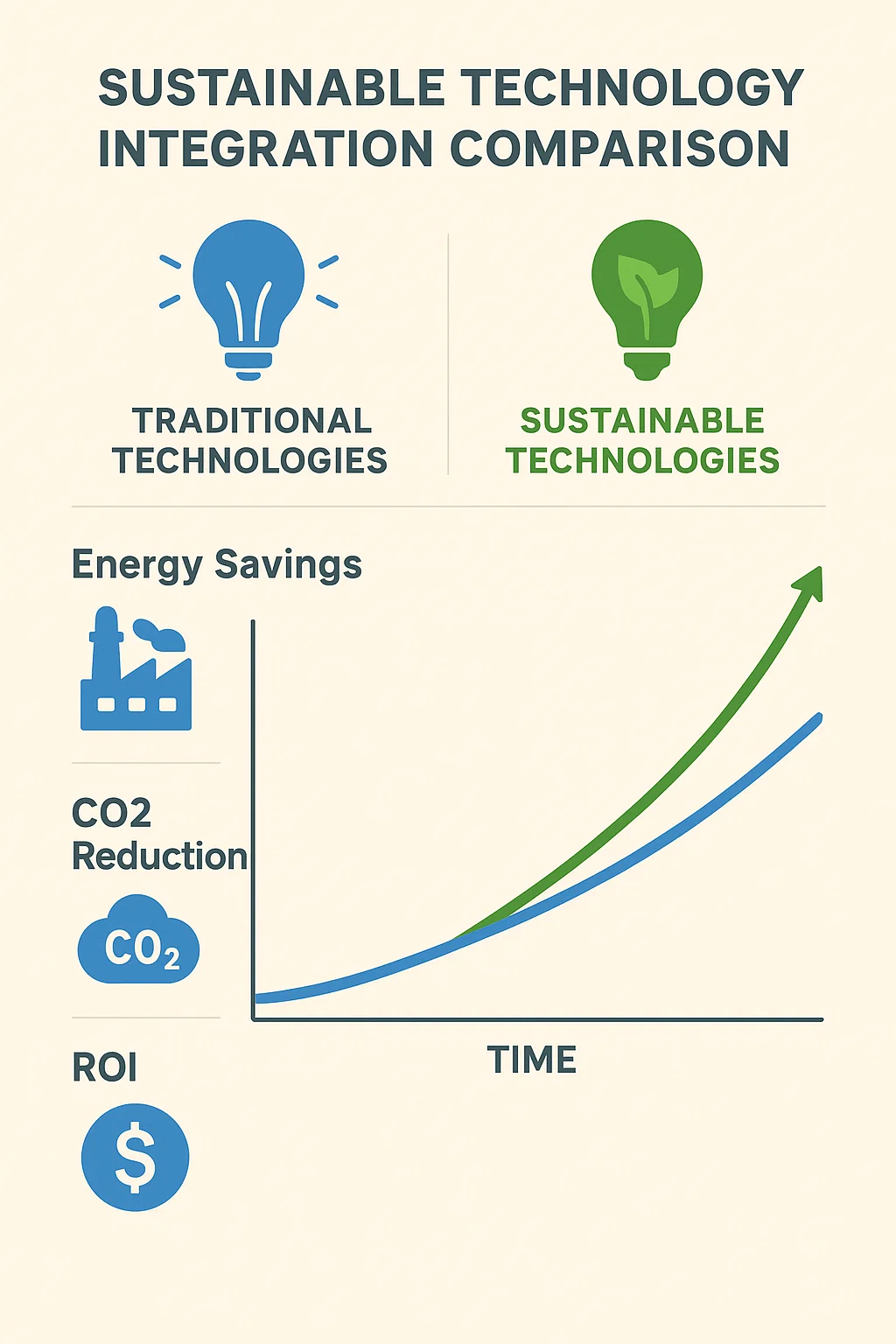
Upfront investments can be high. However, the long-term ROI often outweighs the cost. For example, businesses adopting renewable energy systems typically see full payback within 3–5 years.
2. Data Privacy in IoT
Smart devices collect sensitive data. Secure your IoT systems with encryption and proper access management to prevent breaches.
3. Staff Adoption and Resistance
Employees might resist change due to unfamiliar tools or habits. To overcome this, integrate sustainability goals into daily workflows not as an extra task, but as part of the culture.
As Cisco notes in its 2025 Sustainability Report, “Technology alone won’t solve climate challenges people must drive it forward.”
Expert Insights and Future Trends
Sustainability and technology will continue to converge in the coming decade. Gartner forecasts that by 2030, 90% of enterprises will include sustainability in performance metrics. The IEEE emphasizes the importance of green networking, with next-gen Wi-Fi and 6G promising 30% lower energy use compared to current systems.
Future trends shaping the next era include:
- Smart Grids: Intelligent power systems adjusting energy use dynamically.
- Edge AI: Real-time data processing that cuts cloud energy use.
- Circular Cloud Infrastructure: Recycling and repurposing old servers and components.
- Green Blockchain: Eco-friendly consensus algorithms for business transparency.
These aren’t far-off ideas they’re already rolling out across industries. As businesses adapt, sustainable technology will become the default mode of operation, not the exception.
Practical Checklist for Businesses
Sustainability Integration Checklist
✅ Conduct a sustainability audit
✅ Set measurable goals (e.g., 25% energy reduction)
✅ Invest in renewable energy systems
✅ Implement IoT sensors for energy and water use
✅ Use AI analytics to optimize operations
✅ Educate and train staff regularly
✅ Monitor with real-time dashboards
✅ Communicate results transparently
✅ Partner with green-certified suppliers
✅ Reinvest savings into further sustainability upgrades
This checklist can be printed and displayed in workspaces to keep sustainability front of mind.
Further Learning Resources
- UN Sustainable Development Goals (SDG 9 & 12) Innovation and Responsible Consumption
- Gartner 2025 Green Tech Report Future of Enterprise Sustainability
- Cisco Environmental Sustainability Study 2024 Building sustainable network infrastructure
- McKinsey Sustainability & Growth Playbook (2025 Edition) Data-driven strategies for business transformation
These resources deepen your understanding of how sustainable technology will define competitive advantage in the digital era.
Final Thoughts Before You Try It Yourself
Integrating sustainable technology is more than a corporate trend it’s a movement shaping the future of every business. Whether it’s automating your energy use, using cloud data responsibly, or upgrading your equipment to meet green standards, every step counts.
The path to sustainability begins with one question: “What can I improve today that benefits both my business and the planet tomorrow?”
By answering that, your business doesn’t just adapt it leads.