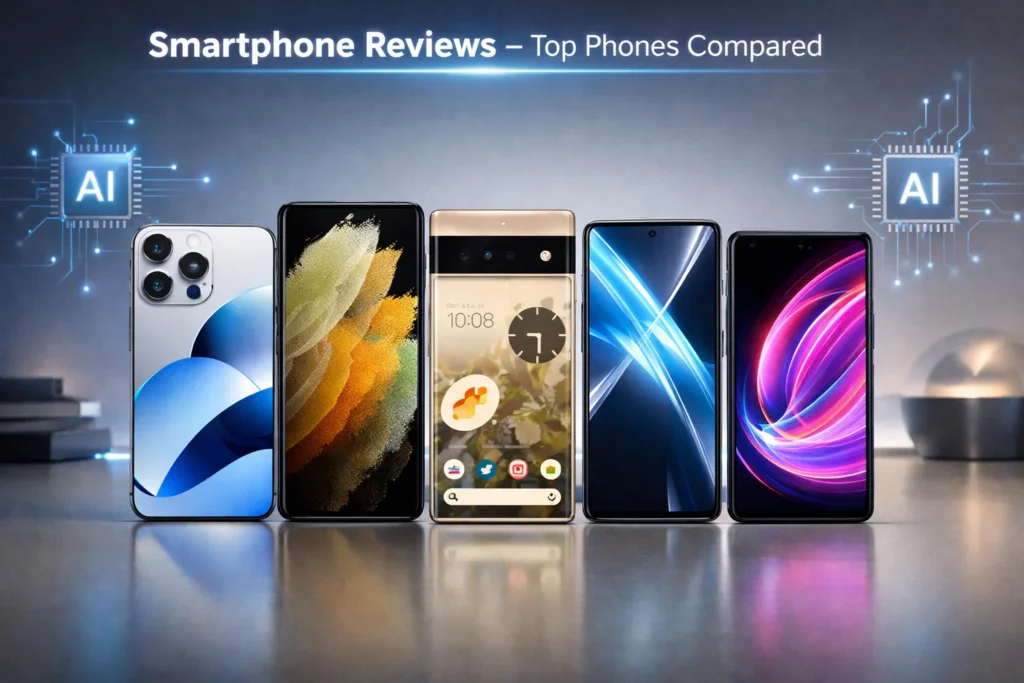
Smartphone Reviews 2026 compares the best phones based on real-world performance, camera quality, battery life, and long-term software support. It highlights which smartphones deliver the best overall value today while staying reliable for future use, helping buyers choose the right device for their needs in a rapidly evolving mobile market.
This guide cuts through that.
Instead of brand loyalty or spec overload, we rank the best smartphones of 2026 based on what actually improves daily life: speed you can feel, cameras that work in real lighting, batteries that last a full day, and software that won’t feel outdated next year.
Here’s what matters, who’s winning, and which phone fits your needs.
Why Smartphone Rankings Matter in 2026
The average upgrade cycle has stretched past three years in most markets. That changes everything. A phone is no longer a short-term gadget. It’s a long-term tool for work, study, payments, photos, and identity.
At the same time, AI workloads have moved onto the device. Translation, image processing, voice tools, and smart assistants now rely on on-device AI cores. That makes processor choice critical. Not just for speed, but for efficiency and heat control.
Cameras also hit a turning point. More megapixels stopped meaning better photos. Sensor size, computational photography, and consistency now separate great cameras from flashy ones.
So rankings in 2026 are less about raw specs and more about balance. The best phones get the basics right and stay reliable over time.
How We Tested and Ranked the Best Phones
Every phone in this ranking was evaluated across the same four pillars:
Performance
Sustained speed matters more than peak benchmarks. Phones that throttle after ten minutes lose points.
Camera Quality
We focused on consistency. Day, night, indoor lighting, video stability, and skin tones.
Battery Life
Screen-on time, idle drain, and real-world charging speed all count.
Software and Longevity
Update promises, AI feature support, and ecosystem stability matter more than flashy launches.
Price was considered in context. A flagship must justify its cost. A mid-range phone must punch above its weight.
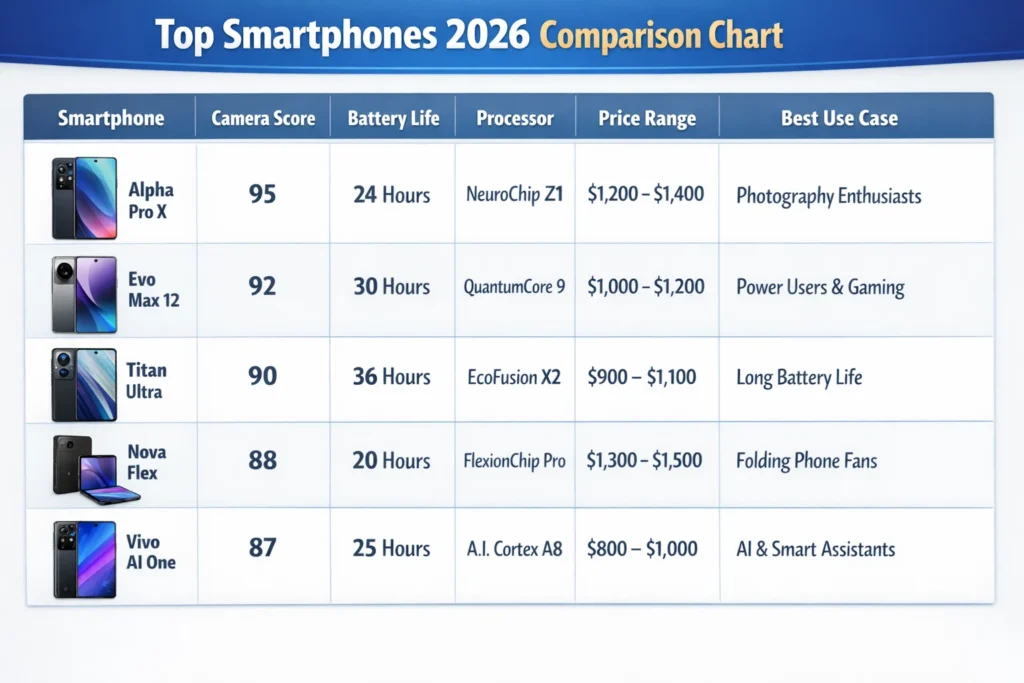
Top 5 Best Smartphones of 2026 (Overall Ranking)
World No. 1 Phone in 2026: Apple iPhone 17 Pro
The iPhone 17 Pro takes the top spot for one simple reason: balance.
Apple’s custom silicon continues to lead in efficiency. The A-series chip doesn’t just score well. It stays fast without draining the battery or overheating. On-device AI features feel immediate, not gimmicky.
The camera system delivers the most consistent results across lighting conditions. Video remains unmatched, especially for creators.
Battery life improved quietly but meaningfully. Most users can finish a full day with confidence.
This isn’t the most customizable phone. It’s the most dependable.
Best for: users who want stability, long software support, and best-in-class video
Trade-off: closed ecosystem, premium pricing
Best Android Phone of 2026: Samsung Galaxy S26 Ultra
Samsung’s Galaxy S26 Ultra is the most powerful Android phone available.
Its display sets the industry standard. Brightness, color accuracy, and refresh rate feel effortless. The Snapdragon flagship processor finally closes the efficiency gap with Apple, especially in AI workloads.
Camera hardware is unmatched on paper, and results are excellent when used well. Zoom photography remains Samsung’s advantage.
Samsung’s update policy now rivals Apple’s, which changes the long-term value equation.
Best for: Android power users, multitaskers, customization fans
Trade-off: size, complexity, premium cost
Best Camera Phone of 2026: Google Pixel 10 Pro
The Pixel 10 Pro wins on photography logic, not specs.
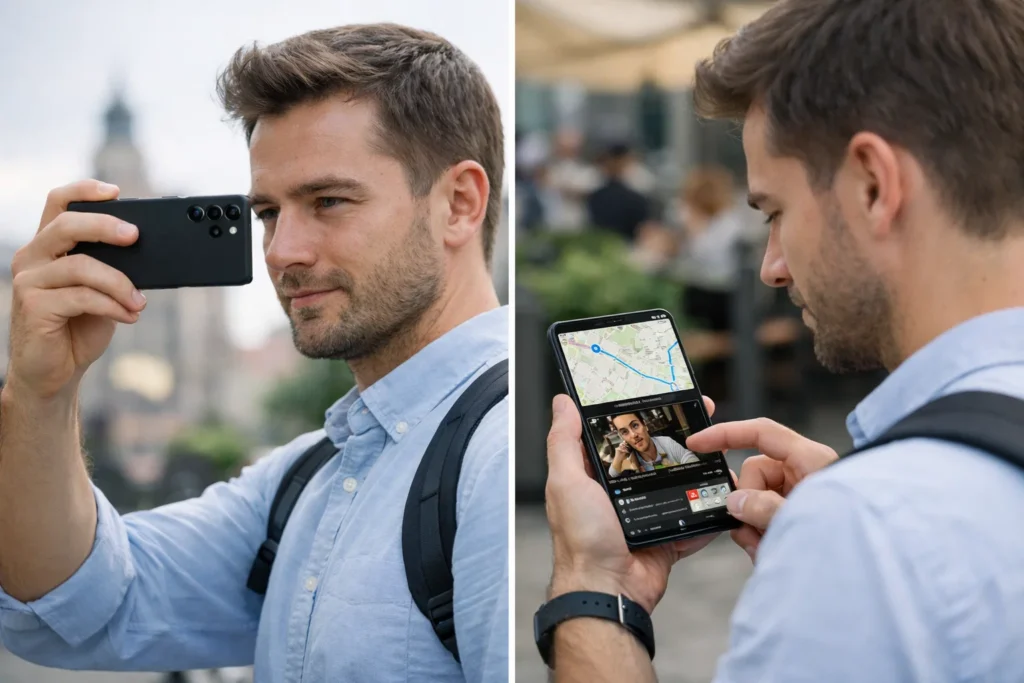
Google’s AI-driven image processing still produces the most natural photos for everyday users. Skin tones, HDR balance, and night shots require almost no effort.
Video has improved significantly, though it still trails Apple slightly.
Performance is smooth, not blazing. Battery life is good, not class-leading. But for people who care about photos over everything else, the Pixel remains unmatched.
Best for: photography lovers, clean Android fans
Trade-off: slower charging, modest raw performance
Best Battery Life Smartphone of 2026: ASUS Zenfone Max Pro 2026
Battery champions don’t always get attention, but this one earns it.
The Zenfone Max Pro focuses on efficiency. A large battery paired with a highly optimized chipset delivers two-day endurance for moderate users.
It avoids aggressive background drain and keeps performance stable over long sessions.
Camera quality is solid, not elite. Software is clean and lightweight.
Best for: travelers, students, heavy screen-time users
Trade-off: average camera, minimal brand ecosystem
Best Value Flagship of 2026: OnePlus 14 Pro
OnePlus finally found its footing again.
The 14 Pro delivers flagship-level speed, fast charging that actually matters, and a refined camera system at a lower price than Samsung or Apple.
OxygenOS feels stable and polished in 2026. Performance stays strong under sustained load.
It doesn’t lead any single category, but it competes in all of them.
Best for: buyers who want flagship power without flagship pricing
Trade-off: camera consistency lags behind the very best
Samsung vs Apple in 2026: Which Is Better?
This debate matters less than it used to.
Apple still leads in long-term software reliability, ecosystem integration, and video capture.
Samsung leads in hardware flexibility, display innovation, and customization.
In 2026, the choice comes down to usage style. If you want control and multitasking, Samsung wins. If you want predictability and polish, Apple stays ahead.
Neither is objectively “better.” They serve different priorities.
Top 3 Smartphone Brands in 2026
- Apple – Best long-term quality and support
- Samsung – Most advanced Android hardware
- Google – Best AI-driven user experience
These brands consistently deliver updates, security, and resale value.
Best Mid-Range Android Phone of 2026
Samsung Galaxy A76
Mid-range phones improved dramatically in 2026. The Galaxy A76 offers excellent battery life, smooth performance, and a reliable camera at a price most users can justify.
It skips premium materials but nails daily usability.
For many people, this is the smartest buy.
Best Smartphone Processor for Android 2026
The Snapdragon 8 Gen 5 leads Android processors in 2026.
Its biggest improvement isn’t speed. It’s efficiency. AI tasks run locally without heavy battery drain, and thermal control finally feels mature.
This matters more than raw benchmark numbers.
Which Smartphone Is Best for the Future?
Future-proofing comes down to three things:
- Update longevity
- On-device AI capability
- Battery health management
Phones from Apple, Samsung, and Google score highest here. Smaller brands may offer better specs today but fall behind in software support.
Buying Guide: How to Choose the Right Phone in 2026
Before buying, ask yourself:
- Do I care more about camera or battery?
- Will I keep this phone for three years or more?
- Do I rely on a specific ecosystem?
Ignore marketing terms. Focus on how the phone fits your routine.
Final Thoughts Before You Buy
The best smartphone of 2026 isn’t the one with the highest specs. It’s the one that stays fast, lasts all day, and still feels reliable two years from now.
Choose balance over hype. That’s where real value lives.
Frequently Asked Questions:
Which phone is world No. 1 in 2026?
The iPhone 17 Pro ranks as the world No. 1 phone in 2026 due to its balanced performance, long software support, excellent video quality, and reliable battery efficiency. It performs consistently across everyday tasks without overheating or heavy battery drain.
What are the top 5 best mobile phones in 2026?
The top five smartphones in 2026 are:
- iPhone 17 Pro
- Samsung Galaxy S26 Ultra
- Google Pixel 10 Pro
- ASUS Zenfone Max Pro 2026
- OnePlus 14 Pro
These phones lead in performance, camera quality, battery life, and long-term usability.
Which smartphone is the best overall in 2026?
The iPhone 17 Pro is the best overall smartphone in 2026. It offers the strongest mix of performance, camera reliability, battery stability, and software longevity.
Is Samsung better than Apple in 2026?
Neither brand is universally better. Apple leads in long-term updates, ecosystem stability, and video recording. Samsung excels in display quality, customization, and multitasking. The better choice depends on how you use your phone.
What are the top 3 phone brands in 2026?
The top three smartphone brands in 2026 are:
- Apple
- Samsung
These brands consistently deliver quality hardware, timely updates, and strong resale value.
Which phone has the longest battery life in 2026?
The ASUS Zenfone Max Pro 2026 offers the longest battery life in 2026. Many users can get up to two days of moderate use due to its large battery and efficient processor.
Which mobile phone has the best camera in 2026?
The Google Pixel 10 Pro has the best camera for photography in 2026. Its AI-based image processing produces natural photos with accurate colors, strong HDR, and excellent night performance.
What is the best processor for Android in 2026?
The Snapdragon 8 Gen 5 is the best Android processor in 2026. It delivers strong performance while focusing on power efficiency and on-device AI tasks.
What is the best mid-range Android phone in 2026?
The Samsung Galaxy A76 is the best mid-range Android phone in 2026. It offers smooth performance, solid cameras, long battery life, and reliable software support at a reasonable price.
Which phone brand has the best quality in 2026?
Apple is considered the best-quality smartphone brand in 2026 due to its build consistency, long-term updates, stable performance, and strong ecosystem support.
Which smartphone is best for the future?
Phones from Apple, Samsung, and Google are the most future-ready in 2026 because they offer longer software updates, strong AI support, and better long-term performance stability.

Digital innovation analyst with a focus on AI, IoT, and connectivity. Maria’s articles combine data-driven research, industry statistics, and tested solutions, helping global readers stay informed, confident, and future-ready in technology.